
Top-rated independent heating and cooling across north Georgia and the southern Appalachians
CO Alarm Sounding
Your carbon monoxide alarm is going off and you are standing in the hallway trying to decide whether it is real. Treat it as real. Get everyone outside to fresh air, then call 911 or your gas utility from outside. Do not open panels, do not sniff around the furnace, do not wait for the noise to stop on its own. Once the scene is clear, we handle the heating side.
Call (888) 878-4879- Real people on the phone
- 7 days a week
- Quote in writing before any work
Taking calls until 5:00 PM ET
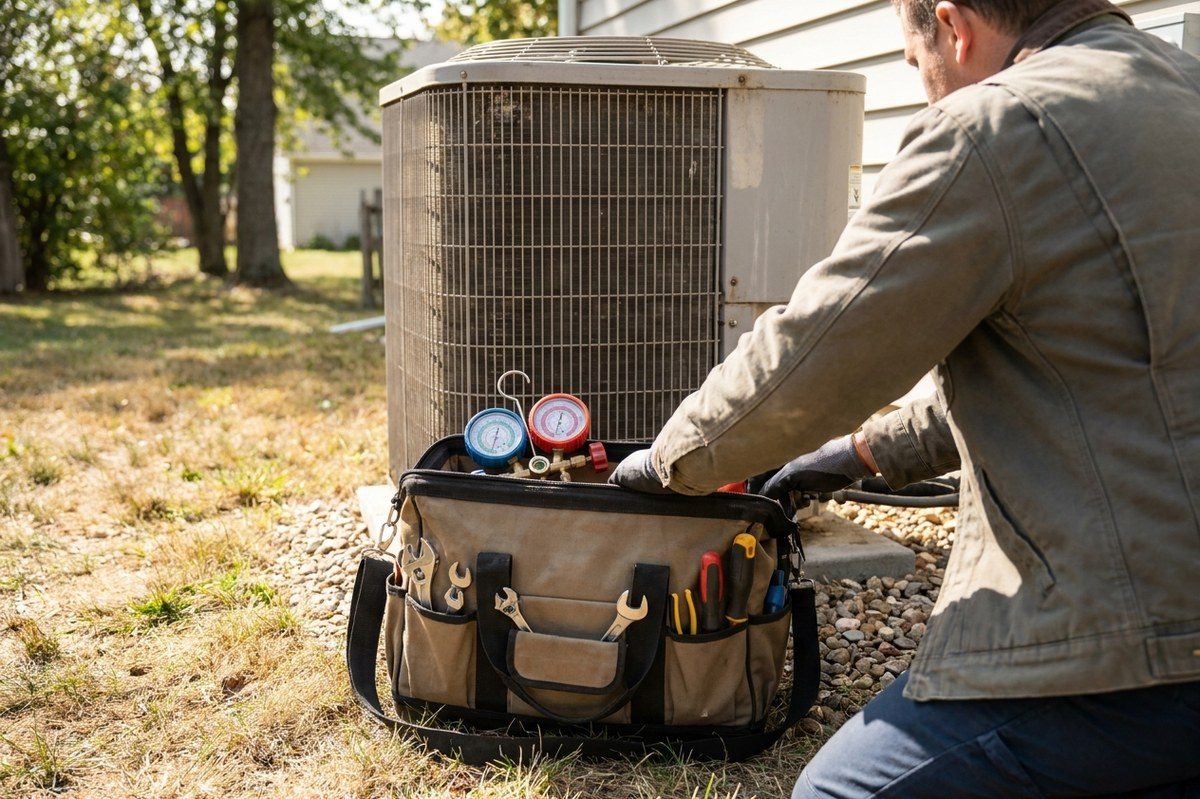
STM Heating & Air service team · field-reviewed before publishing
The First Five Minutes, In Order
1. Get every person and pet outside, into open air, away from the house. Do not stop to gather things. 2. From outside, call 911 or your gas utility's emergency line. Tell them a carbon monoxide alarm sounded. 3. Stay out until they say the building is safe. 4. If anyone has a headache, nausea, dizziness, confusion or has passed out, tell the dispatcher those symptoms so they send medical help. 5. Once the responders clear the house and identify the source, call us to look at the heating equipment. That order matters. Life safety first, equipment second, always.
What Not To Do
Do not pull the batteries to silence the alarm and go back to bed. That is the most common mistake and the most dangerous one. Do not open the furnace cabinet, poke at the heat exchanger, relight a pilot or reset anything on a gas appliance yourself. Do not run the system "just to see" whether the alarm sounds again. Do not use the range, an unvented space heater or a generator anywhere near the house while you wait. Do not assume a quiet alarm means a fixed problem. Carbon monoxide has no smell and no colour, so your nose is not a test.
Where Carbon Monoxide Usually Comes From
Across the region we see it from cracked heat exchangers in gas and propane furnaces, blocked or disconnected flue pipes, corroded vent connectors in damp crawlspaces, and combustion air that got choked off after a remodel or new insulation. Ridge homes running propane and dual-fuel setups have more combustion equipment in play than a valley home on a straight heat pump, so they carry more of these calls. Gas water heaters, fireplaces, wall heaters and attached-garage vehicles also produce it. A running car in a closed garage can set an alarm off with nothing wrong with your heating at all.
When To Call Us, And What We Do
Call us after responders have cleared the building, or the next morning if the alarm sounded and the source was never found. We come out across Alabama, Georgia, Kentucky, North Carolina, South Carolina and Tennessee to inspect the furnace or air handler, check the heat exchanger, test draft and venting, look at combustion air and confirm the flue is intact and pitched right. If the equipment is unsafe, we shut it down and tell you plainly. Then we walk you through repair or replacement options. If we find the heating side clean, we say so and point you toward the other combustion equipment in the house.
Keeping It From Happening Again
Put a carbon monoxide alarm on every level of the house and outside each sleeping area, and replace the units on the schedule printed on the back. They wear out, usually somewhere between seven and ten years, and an expired alarm can either miss a real event or chirp for no reason. Have any gas or propane heating equipment checked before the season turns, when a technician can inspect the heat exchanger and venting with the system cold and calm. Keep the flue and outdoor terminations clear of nests, leaves and snow. Never idle a vehicle in an attached garage, even with the door up.
CO Alarm Sounding — fast answers
My alarm chirped once and stopped. Do I still leave?
A single chirp every minute usually means a low battery or an expired unit, not a detection. A full repeating alarm pattern means leave. If you cannot tell the difference, go outside and call your gas utility.
Can a heat pump produce carbon monoxide?
No. A straight electric heat pump burns no fuel. But many homes pair one with a propane or gas furnace for backup heat, and that furnace can produce carbon monoxide, so an alarm still needs the same response.
Should I open windows before I leave?
Get out first. If a window is on your way to the door and takes a second, fine, but do not walk through the house opening windows. Fresh air outside is the goal, and responders will ventilate properly.
How it works
- Step 1
Tell us the symptom
Call or fill in the quote form and describe what you hear, smell or feel. Warm air, short cycling, a breaker that keeps tripping. That gives us a head start on the likely cause.
- Step 2
We diagnose on site
A technician checks the thermostat, airflow, electrical connections, refrigerant performance and the outdoor unit. We work the crawlspace and the attic too, because ductwork and drainage cause more trouble than people expect.
- Step 3
You decide, then we fix it
We explain what failed, what it takes to repair it, and what we would watch next season. No work starts until you say go. Most repairs finish the same visit when parts are on the truck.
- A real person answers
- Open 7 days
- Written quote before work starts
Why homeowners call us
- Mixed heating is normal to usHeat pumps, propane furnaces and dual-fuel setups all behave differently in cold weather. We know how a heat pump should sound in the thirties and when the backup heat is doing too much of the work.
- We go under the houseRed clay crawlspaces hide crushed ducts, sweating lines and standing water. Comfort problems often start down there, not at the unit, so we look before we start replacing parts you may not need.
- Plain explanationsYou get told what broke and why, in words that make sense. If a repair is a short-term patch on an aging system, we say that out loud so you can plan instead of guessing.
- One crew, six statesWe serve homeowners across Alabama, Georgia, Kentucky, North Carolina, South Carolina and Tennessee. Same approach in every one: show up, diagnose properly, repair what needs repairing, leave the space clean.
- All major brands, gas & electricOne independent crew for Carrier, Trane, Lennox, Goodman, Rheem and more.
- Straight answersNot worth fixing? We say that out loud, and often it saves you the visit fee.
About this guide
When the easy checks change nothing, it's time for a tech
Bring your notes from the checks to the call and booking takes no time.
- A real person answers
- Open 7 days
- Written quotes
- All major brands
- Gas & electric
Rather not call? Get a free quote →