
Top-rated independent heating and cooling across north Georgia and the southern Appalachians
When a Furnace Is Worth Fixing, and When It Isn't
Your furnace quit on a cold morning, and now you are standing in the hallway wondering whether to fix it or start over. We do furnace repair and heating repair across Alabama, Georgia, Kentucky, North Carolina, South Carolina and Tennessee, and we will tell you straight which way we would go. Here is how we think about that call.
Call (888) 878-4879- Real people on the phone
- 7 days a week
- Quote in writing before any work
Taking calls until 5:00 PM ET
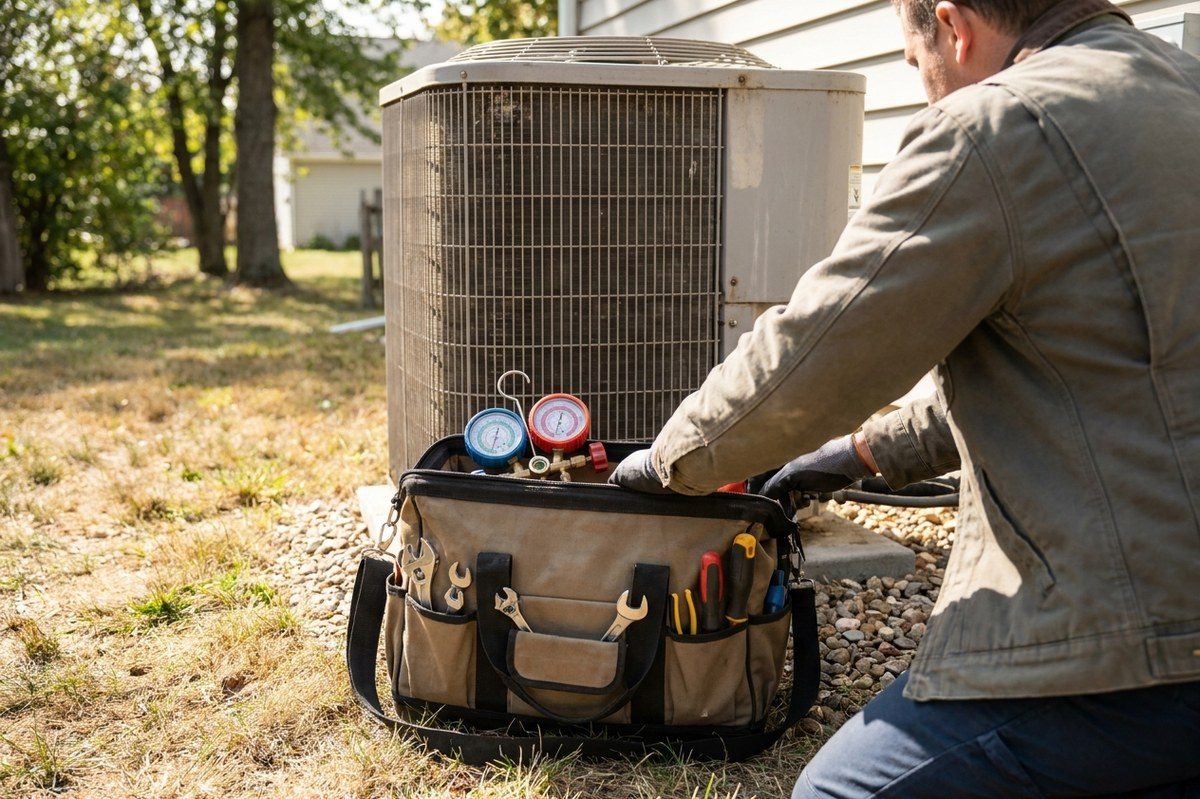
STM Heating & Air service team · field-reviewed before publishing
Age Matters, But It Is Not the Whole Answer
Age tells us what to expect, not what to do. A furnace in its first decade with a bad igniter or a failed inducer motor is almost always worth fixing, and we would fix ours the same way. Once a unit is well past the middle of its expected life, we start looking harder at the rest of it: the heat exchanger, the blower bearings, the wiring, the condition of the cabinet. A furnace that has been serviced and lived in a dry basement ages differently than one sitting over a damp red clay crawlspace. We judge the unit in front of us, not the sticker date alone.
The Fault Type Tells Us Most of the Story
Some failures are routine and some are structural. Flame sensors, igniters, pressure switches, limit switches, capacitors, control boards and gas valves are normal wear items, and replacing them puts the furnace back in real service. A cracked or corroded heat exchanger is different. That is a combustion safety issue, and on an older furnace it usually points toward replacement rather than a patch. Same with a rusted-through burner assembly or a cabinet that has been eaten by years of moisture. When we find a safety fault, we shut the unit down and explain exactly what we saw before we talk about options.
Parts Availability and Matching
A repair only works if the part exists. Older furnaces and discontinued models can leave us hunting a control board or a specific gas valve, and sometimes the honest answer is that nothing correct is available anymore. Universal parts help in some spots and not in others. Matching matters too. If your furnace pairs with an outdoor unit in a heat pump or dual-fuel setup, common up on the ridges around here, replacing one half without thinking about the other can leave you with a system that never quite runs right. We look at the whole setup, including ductwork and the thermostat controlling it.
How We Work Through It on the Visit
We start with what you told us on the phone, then verify it ourselves. That means checking the thermostat call, the power, the filter and the venting, then working through the ignition sequence and reading what the furnace is actually doing. We inspect the heat exchanger and the flue, look at the blower and the drain side if there is one, and check the crawlspace or attic runs when the symptoms point there. Then we sit down with you and lay out the repair, what it fixes, what it does not fix, and what we would expect from the unit afterward. You make the call with real information.
Honest Cases Where Replacement Wins
Sometimes we recommend replacement, and here is when. A confirmed heat exchanger failure on an aging furnace. Repeated repairs in the same season on different components, which usually means the unit is failing broadly. Parts that no longer exist. A furnace that was undersized or oversized for the house from day one and has never kept up. Heavy corrosion from years of standing water underneath. And any situation where a carbon monoxide concern is present. If you smell gas or your CO alarm sounds, leave the house first, call 911 or your gas utility, then call us.
When a Furnace Is Worth Fixing, and When It Isn't — fast answers
Can I keep running my furnace until I decide?
If we found a combustion or carbon monoxide concern, no. We shut it down and tell you why. For a mechanical fault with no safety issue, we will tell you plainly whether short-term operation is reasonable.
Will one repair lead to another?
Sometimes. On an older furnace, fixing one worn component does not make the rest new. We tell you what else looked marginal during the visit so the decision is not a surprise later.
Does a heat pump change the answer?
Yes. In dual-fuel systems the furnace only carries the coldest hours, so wear patterns differ. We look at both halves and the controls before recommending anything, because replacing one side affects the other.
How it works
- Step 1
Tell us the symptom
Call or fill in the quote form and describe what you hear, smell or feel. Warm air, short cycling, a breaker that keeps tripping. That gives us a head start on the likely cause.
- Step 2
We diagnose on site
A technician checks the thermostat, airflow, electrical connections, refrigerant performance and the outdoor unit. We work the crawlspace and the attic too, because ductwork and drainage cause more trouble than people expect.
- Step 3
You decide, then we fix it
We explain what failed, what it takes to repair it, and what we would watch next season. No work starts until you say go. Most repairs finish the same visit when parts are on the truck.
- A real person answers
- Open 7 days
- Written quote before work starts
Why homeowners call us
- Mixed heating is normal to usHeat pumps, propane furnaces and dual-fuel setups all behave differently in cold weather. We know how a heat pump should sound in the thirties and when the backup heat is doing too much of the work.
- We go under the houseRed clay crawlspaces hide crushed ducts, sweating lines and standing water. Comfort problems often start down there, not at the unit, so we look before we start replacing parts you may not need.
- Plain explanationsYou get told what broke and why, in words that make sense. If a repair is a short-term patch on an aging system, we say that out loud so you can plan instead of guessing.
- One crew, six statesWe serve homeowners across Alabama, Georgia, Kentucky, North Carolina, South Carolina and Tennessee. Same approach in every one: show up, diagnose properly, repair what needs repairing, leave the space clean.
- All major brands, gas & electricOne independent crew for Carrier, Trane, Lennox, Goodman, Rheem and more.
- Straight answersNot worth fixing? We say that out loud, and often it saves you the visit fee.
About this guide
Safe checks done and it still misbehaves? That's a real fault
Bring your notes from the checks to the call and booking takes no time.
- A real person answers
- Open 7 days
- Written quotes
- All major brands
- Gas & electric
Rather not call? Get a free quote →