
Top-rated independent heating and cooling across north Georgia and the southern Appalachians
Water Pooling Around the Furnace
You walked past the furnace and saw a wet spot on the concrete. Maybe a thin puddle, maybe a stain that keeps coming back. Water near a heating system almost always traces back to condensate drainage, a humidifier, or the AC coil sitting in the same cabinet. Most of it is fixable. Here is where the water comes from and what to do next.
Call (888) 878-4879- Real people on the phone
- 7 days a week
- Quote in writing before any work
Taking calls until 5:00 PM ET
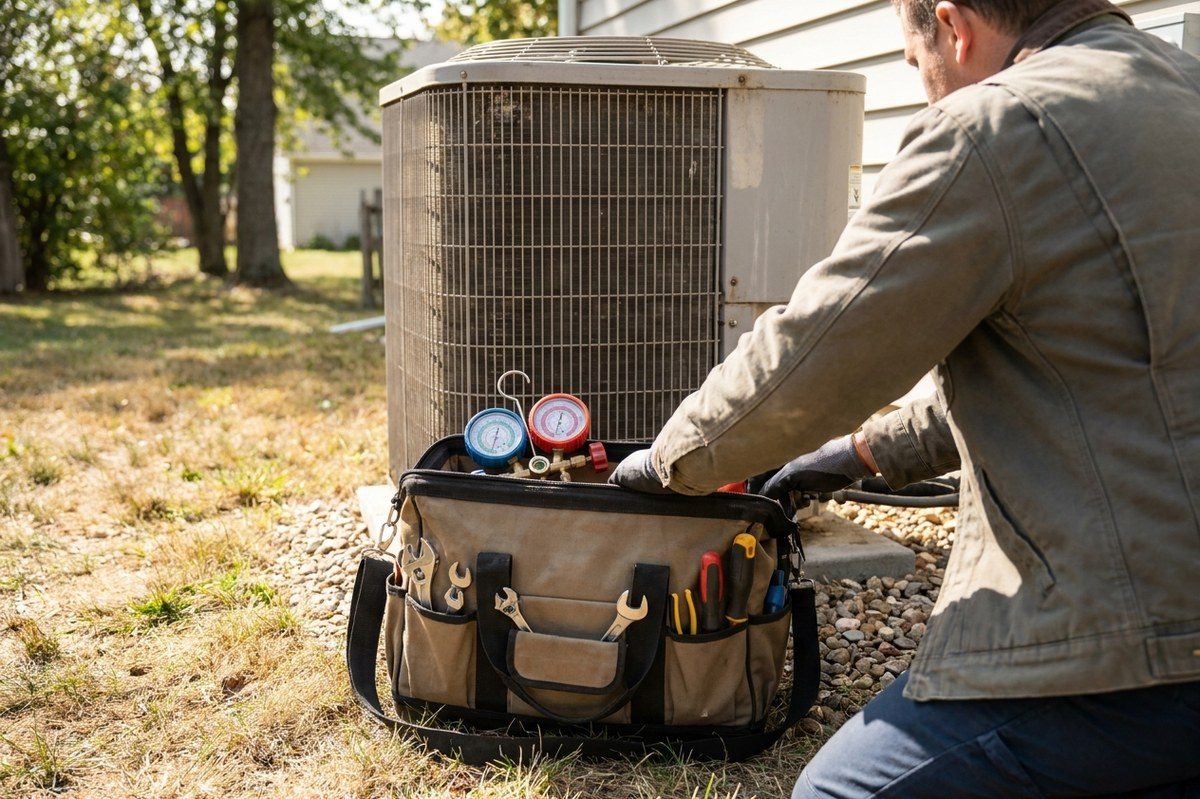
STM Heating & Air service team · field-reviewed before publishing
What a Puddle Around the Furnace Actually Means
Water on the floor means liquid is being produced somewhere in the cabinet and not leaving through the drain the way it should. High efficiency furnaces make water on purpose. They pull so much heat out of the exhaust that moisture condenses inside the heat exchanger and drains away through a small tube. Anything that blocks or breaks that path puts water on your floor. If your system also has a cooling coil above or below the furnace, that coil makes a lot of condensate in summer and shares the same drain. So the puddle may have nothing to do with heating at all. Shut the system off at the thermostat if water is actively running, and call us for heating repair.
Cause One: A Clogged or Disconnected Condensate Drain
This is the most common and the cheapest to fix. Condensate lines are narrow, and over a few seasons they collect sludge, dust that got past a loose filter, and in crawlspace runs a fair amount of red clay grit. Once the line backs up, the drain pan overflows and water finds the floor. Rubber connections dry out and slip off. Traps crack. Gravity drains that were routed with a slight uphill run never worked right to begin with. If your system uses a condensate pump, that pump can fail or its check valve can stick, and the pan fills within a day. A technician clears the line, tests the flow with water, and re-pitches or replaces the tubing.
Cause Two: The Cooling Side and the Drain Pan
If the puddle shows up in cooling weather, look at the AC side. The evaporator coil sits in the same cabinet or in the plenum above it, and it sheds water all summer. A dirty filter or a low airflow problem lets that coil freeze, and when it thaws it dumps more water than the pan can handle at once. Older secondary pans rust through. Insulation on the coil box can hold water against metal until the seam gives. Frozen coils also point at a refrigerant issue, which is not a homeowner check. We measure airflow and temperature split before touching refrigerant, because the freeze is usually a symptom of something upstream.
Cause Three: Humidifiers, Flue Problems and Water From Elsewhere
A whole home humidifier tied to your ductwork has its own water feed and drain. A stuck solenoid valve or a clogged humidifier drain runs water continuously, and plenty of homeowners find that puddle in January. Next, a blocked or improperly sloped flue pipe on a high efficiency unit lets condensate pool in the vent and back into the cabinet. Finally, not every puddle comes from the furnace. Crawlspaces and basements across our region take on groundwater after a hard rain, and water heaters and supply lines sit nearby. Follow the wet trail to its highest point before assuming the heating system caused it.
What You Can Safely Check, and What We Do Differently
Safe homeowner checks: change the air filter if it is loaded, confirm the thermostat is set the way you want it, check the breaker for the air handler, make sure supply and return vents are open, and keep leaves and debris clear of the outdoor unit. Do not open the gas train, touch refrigerant lines, or work inside the electrical cabinet. If you smell gas or your carbon monoxide alarm sounds, leave the building first, call 911 or your gas utility from outside, then call us. On our end we trace the full condensate path, pressure test the drain, inspect the heat exchanger and inducer, check the flue slope, and verify airflow. We handle air conditioning repair and heating repair on the same visit because the two share that drain.
Water Pooling Around the Furnace — fast answers
Is water around my furnace an emergency?
Usually not, but shut the system off at the thermostat and mop the water up. Standing water near electrical components and metal causes rust and control board failures. If you smell gas, leave the building and call 911 or your gas utility first.
Can I just pour bleach down the condensate line?
We would rather you did not. Bleach attacks some metals in the drain pan and coil. A clogged line needs to be cleared and flow tested, then the reason it clogged found, usually a filter that let dust through.
Why is water leaking in summer when the heat is off?
Because the cooling coil sits in the same cabinet and produces condensate that shares the furnace drain. A clog, a rusted pan, or a frozen coil will put water on the floor in July. That is an air conditioner repair, not a furnace problem.
How it works
- Step 1
Tell us the symptom
Call or fill in the quote form and describe what you hear, smell or feel. Warm air, short cycling, a breaker that keeps tripping. That gives us a head start on the likely cause.
- Step 2
We diagnose on site
A technician checks the thermostat, airflow, electrical connections, refrigerant performance and the outdoor unit. We work the crawlspace and the attic too, because ductwork and drainage cause more trouble than people expect.
- Step 3
You decide, then we fix it
We explain what failed, what it takes to repair it, and what we would watch next season. No work starts until you say go. Most repairs finish the same visit when parts are on the truck.
- A real person answers
- Open 7 days
- Written quote before work starts
Why homeowners call us
- Mixed heating is normal to usHeat pumps, propane furnaces and dual-fuel setups all behave differently in cold weather. We know how a heat pump should sound in the thirties and when the backup heat is doing too much of the work.
- We go under the houseRed clay crawlspaces hide crushed ducts, sweating lines and standing water. Comfort problems often start down there, not at the unit, so we look before we start replacing parts you may not need.
- Plain explanationsYou get told what broke and why, in words that make sense. If a repair is a short-term patch on an aging system, we say that out loud so you can plan instead of guessing.
- One crew, six statesWe serve homeowners across Alabama, Georgia, Kentucky, North Carolina, South Carolina and Tennessee. Same approach in every one: show up, diagnose properly, repair what needs repairing, leave the space clean.
- All major brands, gas & electricOne independent crew for Carrier, Trane, Lennox, Goodman, Rheem and more.
- Straight answersNot worth fixing? We say that out loud, and often it saves you the visit fee.
About this guide
Past the safe checks, it's a job for tools and a meter
Bring your notes from the checks to the call and booking takes no time.
- A real person answers
- Open 7 days
- Written quotes
- All major brands
- Gas & electric
Rather not call? Get a free quote →