
Top-rated independent heating and cooling across north Georgia and the southern Appalachians
Furnace Turning On and Off Every Few Minutes
Your furnace fires up, runs three or four minutes, shuts off, then starts again. The house never really gets warm and the burner noise keeps interrupting the evening. That pattern is called short cycling, and it usually means the furnace is overheating, being told to stop early, or fighting a restriction somewhere. We handle heating repair on furnaces, heat pumps and dual-fuel systems across the region.
Call (888) 878-4879- Real people on the phone
- 7 days a week
- Quote in writing before any work
Taking calls until 5:00 PM ET
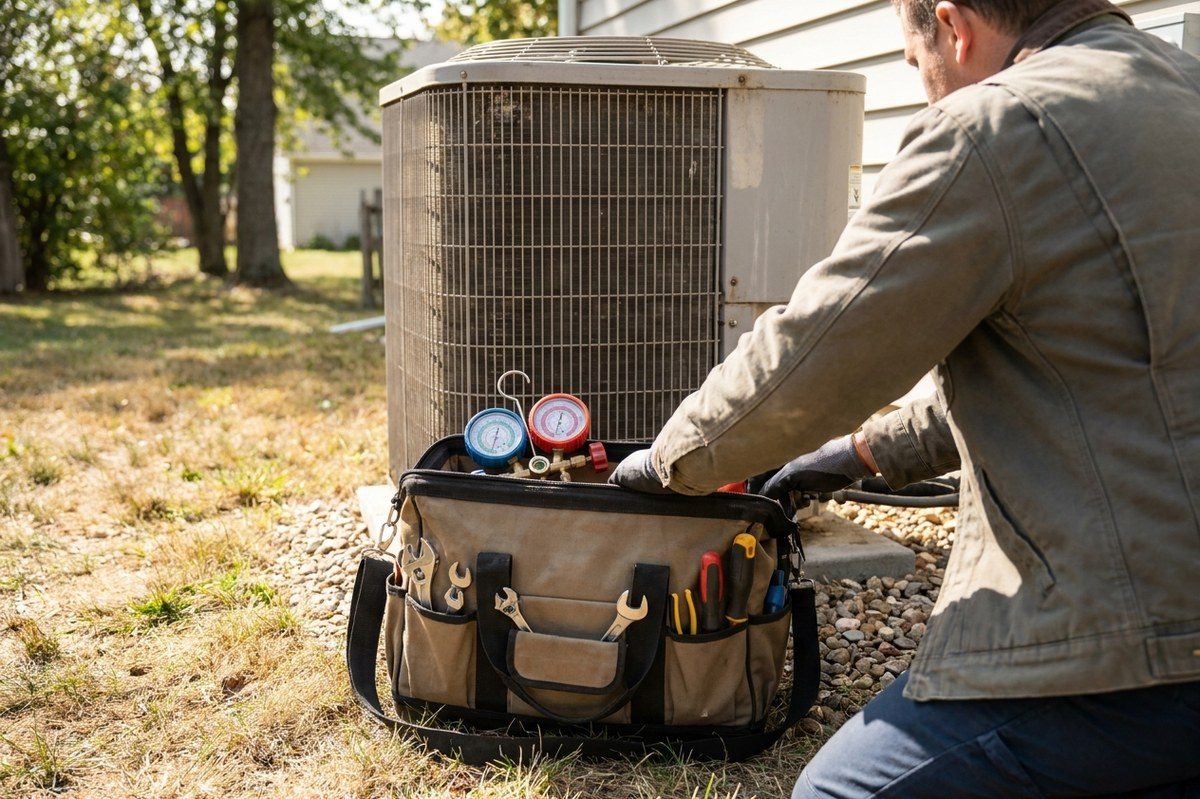
STM Heating & Air service team · field-reviewed before publishing
What Short Cycling Actually Means
A furnace is built to run in longer stretches, warm the house steadily, then rest. When it runs only a few minutes at a time, something is cutting the cycle short before the thermostat is satisfied. The most common reason is heat building up inside the cabinet faster than air can carry it away, which trips a safety limit switch and shuts the burners down. Other times the thermostat is misreading the room, or a flame sensor and control board are losing their signal. None of it is normal, and none of it fixes itself. Short cycling wears out ignitors, blower motors and heat exchangers faster than steady running does.
Start With Airflow, The Cheapest Cause
Restricted airflow causes more short cycling calls than anything else we see. A loaded filter, closed or blocked supply vents, or a crushed flex duct in a crawlspace all starve the blower. The heat exchanger gets hotter than designed, the high limit switch opens, and the burners stop while the blower keeps running. Then everything cools, the limit resets, and the cycle repeats. In older foothill homes with long duct runs through red clay crawlspaces, we also find disconnected returns and duct sections that separated years ago. Change the filter first and open every vent in the house. If it still cycles, the restriction is further in.
Thermostat, Controls And Sizing
A thermostat in the wrong spot will short cycle a perfectly good furnace. Direct sun, a nearby supply register, or a draft down an interior wall makes the thermostat think the room hit temperature early. Weak batteries and loose wiring cause the same stutter. Beyond the thermostat, the control board, flame sensor and pressure switch each have the authority to stop a cycle, and a dirty flame sensor is a classic few-minutes-then-off complaint. Finally, a furnace with more BTU output than the house needs will always cycle fast, because it satisfies the thermostat before the air has moved around. That one is a replacement conversation, not a repair.
What Is Safe For You To Check
Keep it to five things. Put fresh batteries in the thermostat and confirm it is set to heat with a target above room temperature. Check the breaker panel for a tripped breaker and reset it once. Replace the air filter if it looks grey or you cannot remember the last change. Walk the house and open supply and return vents, including in spare bedrooms. If you have a heat pump or dual-fuel setup, clear leaves, mulch and snow away from the outdoor unit. Stop there. Anything involving gas lines, burners, refrigerant or high-voltage wiring needs a technician with gauges and a meter, not a homeowner with a screwdriver.
Gas Smell Or Carbon Monoxide Comes First
If you smell gas, get everyone out of the house first, then call 911 or your gas utility from outside. Do not flip switches, do not use the thermostat, do not go looking for the source. Same answer if a carbon monoxide alarm sounds: leave the building, call 911, and stay out until the fire department or utility clears it. Once the property is safe, call us and we will inspect the heat exchanger, burners and venting. Repeated short cycling can be an early sign of a combustion or venting problem, so a furnace that has started stopping and starting deserves a look before it gets worse.
What A Technician Does Differently
We measure instead of guess. Temperature rise across the heat exchanger tells us in minutes whether airflow is the problem, and static pressure readings show whether the restriction is the filter, the coil or the ductwork. We check the flame sensor microamp signal, test the limit and pressure switches, verify gas pressure at the valve, and read stored fault codes off the control board. On dual-fuel systems we also confirm the changeover logic is not bouncing between the heat pump and the furnace. From there you get a plain explanation of the cause and the repair options. Call STM Heating and Air for heating repair and furnace repair across Alabama, Georgia, Kentucky, North Carolina, South Carolina and Tennessee.
When it is time to book
Furnace Turning On and Off Every Few Minutes — fast answers
Is it bad to keep using the furnace while it short cycles?
Short runs will not usually damage the house, but they wear the ignitor, blower and heat exchanger and may signal a safety switch doing its job. Change the filter, open the vents, and get it looked at soon rather than later.
Why does the blower keep running after the burners stop?
That is normal on a limit trip. The control keeps the blower going to pull leftover heat out of the cabinet. If it happens every cycle, the furnace is overheating and airflow is the first thing we test.
Could a dirty filter really cause this?
Yes, and it is the most common cause we find. A loaded filter starves the blower, heat builds inside the furnace, and the high limit switch shuts the burners off early. Replace it and see if the cycles lengthen.
How it works
- Step 1
Tell us the symptom
Call or fill in the quote form and describe what you hear, smell or feel. Warm air, short cycling, a breaker that keeps tripping. That gives us a head start on the likely cause.
- Step 2
We diagnose on site
A technician checks the thermostat, airflow, electrical connections, refrigerant performance and the outdoor unit. We work the crawlspace and the attic too, because ductwork and drainage cause more trouble than people expect.
- Step 3
You decide, then we fix it
We explain what failed, what it takes to repair it, and what we would watch next season. No work starts until you say go. Most repairs finish the same visit when parts are on the truck.
- A real person answers
- Open 7 days
- Written quote before work starts
Why homeowners call us
- Mixed heating is normal to usHeat pumps, propane furnaces and dual-fuel setups all behave differently in cold weather. We know how a heat pump should sound in the thirties and when the backup heat is doing too much of the work.
- We go under the houseRed clay crawlspaces hide crushed ducts, sweating lines and standing water. Comfort problems often start down there, not at the unit, so we look before we start replacing parts you may not need.
- Plain explanationsYou get told what broke and why, in words that make sense. If a repair is a short-term patch on an aging system, we say that out loud so you can plan instead of guessing.
- One crew, six statesWe serve homeowners across Alabama, Georgia, Kentucky, North Carolina, South Carolina and Tennessee. Same approach in every one: show up, diagnose properly, repair what needs repairing, leave the space clean.
- All major brands, gas & electricOne independent crew for Carrier, Trane, Lennox, Goodman, Rheem and more.
- Straight answersNot worth fixing? We say that out loud, and often it saves you the visit fee.
About this guide
Safe checks done and it still misbehaves? That's a real fault
Mention which checks you ran when you book; it speeds up the visit.
- A real person answers
- Open 7 days
- Written quotes
- All major brands
- Gas & electric
Rather not call? Get a free quote →