
Top-rated independent heating and cooling across north Georgia and the southern Appalachians
Should You Close Vents in Rooms You Don't Use?
You pay to heat and cool the whole house, so closing the vents in the spare bedroom feels like free money. It is not. Short answer: leave your vents open. Your system was sized for every room, and shutting registers raises pressure inside the ductwork, which costs you comfort and parts. Here is what happens over time and what to watch for.
Call (888) 878-4879- Real people on the phone
- 7 days a week
- Quote in writing before any work
Taking calls until 5:00 PM ET
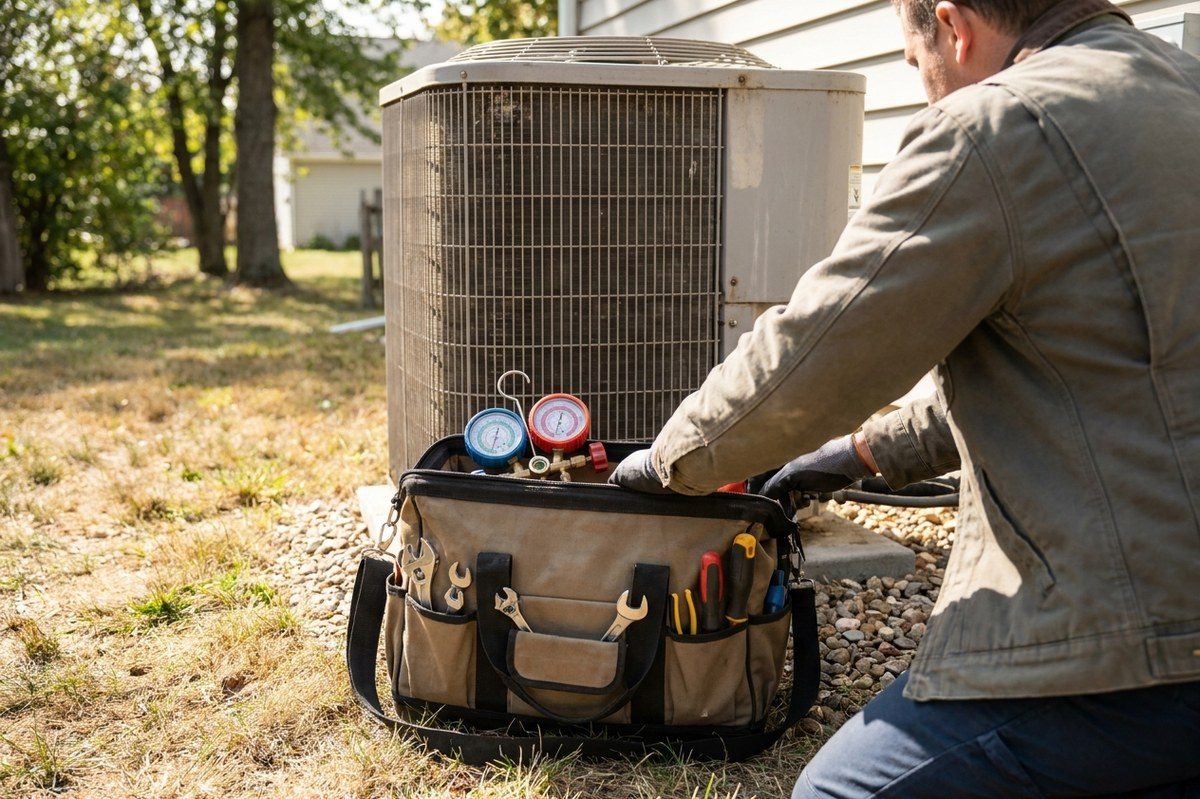
STM Heating & Air service team · field-reviewed before publishing
What Closing Vents Actually Does To Your System
Your blower moves a set amount of air no matter how many registers are open. Close off two or three and that air has nowhere to go, so static pressure climbs inside the duct. In cooling, less air across the indoor coil means the coil runs colder than intended and can ice over, which shows up as weak airflow and a puddle near the air handler. In heating, a furnace with restricted return and supply air runs hotter, and the high limit switch starts shutting the burners down early. Either way, the equipment works harder for less comfort, and short cycling wears the blower motor and the compressor.
The Duct Leakage Problem Nobody Sees
Most homes across Georgia, Alabama, Tennessee, the Carolinas and Kentucky have ductwork running through a crawlspace or an attic. Those joints and boots are never perfectly sealed. When you close registers and pressure rises, more of your conditioned air pushes out through every small gap instead of reaching your rooms. In red clay crawlspaces that also means the return side can start pulling damp, musty air up into the house. So you are paying to condition a crawlspace and getting humidity and smells for your trouble. Open vents keep duct pressure closer to what the system was designed for, which keeps the air inside the ducts where it belongs.
The Simple Habit That Prevents All Of It
Twice a year, walk the whole house and look at every supply register and every return grille. Supply vents should be open. Not cracked, not half shut, open. Then check that furniture, a rug, a bed skirt or a stack of boxes is not sitting on top of one. Returns need the same clearance. While you are walking, change the filter and note which rooms feel off compared to the thermostat. Spring and fall are the natural times, right before you switch from heating to cooling. It takes ten minutes and it prevents the pressure problems that quietly shorten the life of a blower motor.
If One Room Is Always Wrong, That Is A Design Issue
Closing vents is usually a homeowner trying to fix a room that never gets comfortable. That room has a real cause: an undersized duct run, a crushed flex line in the crawlspace, a disconnected boot, or too much load from west-facing windows. Damping down other rooms to force air into it is a workaround that stresses the whole system. The right fix is balancing the ductwork, correcting the run that is choked off, or adding a zone. We can measure airflow room by room and tell you which one it is. That is a real repair, and it holds instead of drifting back out of balance every season.
Warning Signs It Has Already Gone Too Far
Call us if you see any of these: ice on the refrigerant lines or the indoor coil, a whistling or roaring sound at the registers, rooms that swing several degrees from the thermostat setting, or heating that starts and stops every few minutes without satisfying the thermostat. Water staining under the air handler points to a coil that has been freezing and thawing. A blower that hums louder than it used to is working against pressure it was not built for. Before you call, you can check thermostat settings and batteries, reset a tripped breaker, put in a clean filter, clear leaves away from the outdoor unit and open every vent. If you ever smell gas, get everyone outside first, call 911 or your gas utility from outdoors, then call us for the heating repair.
Should You Close Vents in Rooms You Don't Use? — fast answers
Will closing vents in unused rooms lower my power bill?
No. The blower still moves the same air, so pressure builds in the ductwork and more conditioned air leaks out through crawlspace and attic joints. Runtimes usually get longer, not shorter, and parts wear faster.
Is it ever okay to close a vent?
Slightly adjusting one or two registers to balance a room is fine. Fully closing several is where trouble starts. If a room is consistently too hot or cold, the ductwork needs balancing rather than closed vents.
What about doors to unused rooms?
Closing a door on a room whose vent is open traps air with no return path, which pressurizes that room and starves the rest of the house. Leave the door cracked, or ask us about adding a return.
How it works
- Step 1
Tell us the symptom
Call or fill in the quote form and describe what you hear, smell or feel. Warm air, short cycling, a breaker that keeps tripping. That gives us a head start on the likely cause.
- Step 2
We diagnose on site
A technician checks the thermostat, airflow, electrical connections, refrigerant performance and the outdoor unit. We work the crawlspace and the attic too, because ductwork and drainage cause more trouble than people expect.
- Step 3
You decide, then we fix it
We explain what failed, what it takes to repair it, and what we would watch next season. No work starts until you say go. Most repairs finish the same visit when parts are on the truck.
- A real person answers
- Open 7 days
- Written quote before work starts
Why homeowners call us
- Mixed heating is normal to usHeat pumps, propane furnaces and dual-fuel setups all behave differently in cold weather. We know how a heat pump should sound in the thirties and when the backup heat is doing too much of the work.
- We go under the houseRed clay crawlspaces hide crushed ducts, sweating lines and standing water. Comfort problems often start down there, not at the unit, so we look before we start replacing parts you may not need.
- Plain explanationsYou get told what broke and why, in words that make sense. If a repair is a short-term patch on an aging system, we say that out loud so you can plan instead of guessing.
- One crew, six statesWe serve homeowners across Alabama, Georgia, Kentucky, North Carolina, South Carolina and Tennessee. Same approach in every one: show up, diagnose properly, repair what needs repairing, leave the space clean.
- All major brands, gas & electricOne independent crew for Carrier, Trane, Lennox, Goodman, Rheem and more.
- Straight answersNot worth fixing? We say that out loud, and often it saves you the visit fee.
About this guide
If the safe checks didn't fix it, the fault is real
Mention which checks you ran when you book; it speeds up the visit.
- A real person answers
- Open 7 days
- Written quotes
- All major brands
- Gas & electric
Rather not call? Get a free quote →