
Top-rated independent heating and cooling across north Georgia and the southern Appalachians
Duct Sealing or Duct Replacement
Some rooms never get warm, the system runs long, and someone told you the ducts are the problem. Now you want to know whether sealing them is enough or whether the whole run needs to come out. We look at ducts in crawlspaces and attics across Alabama, Georgia, Kentucky, North Carolina, South Carolina and Tennessee, and here is how we read the trade-off.
Call (888) 878-4879- Real people on the phone
- 7 days a week
- Quote in writing before any work
Taking calls until 5:00 PM ET
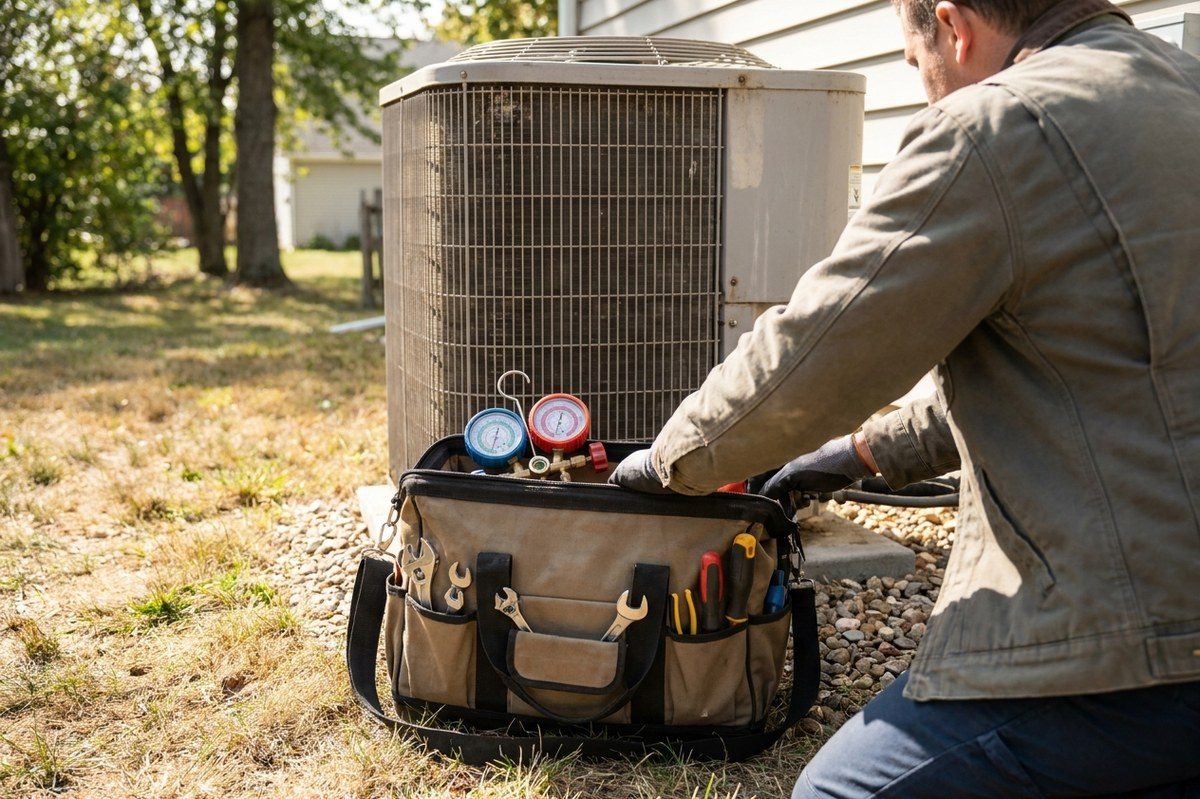
STM Heating & Air service team · field-reviewed before publishing
What actually decides it: age, fault type, and what the duct is made of
Sealing wins when the duct body is sound and the leaks are at the joints. That is most flex duct under ten or fifteen years old, and most sheet metal trunk work that has simply lost its tape. Replacement moves ahead when the material itself has failed: inner liner torn open, insulation soaked and packed flat from a wet crawlspace, or old duct board with crumbling edges. Rodent damage counts as material failure too. We also look at how the runs were built. A duct crushed under a joist or kinked around a corner cannot be sealed into working right, because the restriction is the fault.
Matching the ducts to the system you have now
Duct sizing matters as much as duct condition. A lot of homes in the region got a bigger or smaller system than the original one, and the duct work never changed. If your air handler is moving more air than the returns can feed, you get noise, short runs starving, and a coil that runs colder than it should. Sealing a mismatched system makes the mismatch louder, not better. When we find undersized returns or a supply trunk feeding too many branches, we talk about reworking a section rather than taping what is there. Sometimes that is one new return, not a whole rebuild.
How we think about it on a visit
We get in the crawlspace or attic with a light and walk the whole run, boot to plenum. We look at every connection, feel for air moving where it should not, check whether the insulation is dry, and note any run that has come loose from a boot. Then we check static pressure at the air handler and compare what the registers are actually delivering room to room. That tells us whether you have a leak problem, a restriction problem, or a design problem. We tell you which of the three it is before we quote anything, and we show you the spot.
Honest cases where replacement wins
If the flex duct liner is torn in several places, patching buys you a season at best. If a crawlspace has flooded and the duct insulation has been wet more than once, the fiberglass holds moisture against the liner and it will not dry out down there in red clay. Old duct board with soft, flaking edges cannot hold a seal. And if half the branches are the wrong size for the equipment, sealing the good half only shifts air away from the rooms that already struggle. In those cases we would rather replace the bad section and leave the sound trunk alone.
What sealing done right looks like
Proper sealing means mastic on the joints and boots, mechanical fasteners where the duct meets the collar, and the insulation put back so it covers the metal. Tape alone on a dusty crawlspace duct comes loose, usually in the first summer. We also seal where the ducts meet the air handler cabinet and at the return plenum, which is often the biggest single leak in the house and the easiest one to miss. After sealing we recheck static pressure and register airflow so you can see the change rather than take our word for it. Filter changes matter here too.
Duct Sealing or Duct Replacement — fast answers
Can I just seal the ducts I can reach?
You can seal accessible joints, but the leaks that cost you most are usually at the plenum and the boots under the floor. Partial sealing helps a little. We would rather find every leak on the run before you spend anything.
Will sealing ducts fix one hot room?
Sometimes. If that room's branch is leaking into the crawlspace, sealing fixes it. If the branch is undersized, crushed, or too long for the trunk feeding it, sealing changes nothing and the duct needs reworking.
How long does duct sealing take?
Most homes take a good part of a day, depending on crawlspace access and how many boots need pulling back. Full replacement of a section runs longer. We tell you the scope after we have walked the runs.
How it works
- Step 1
Tell us the symptom
Call or fill in the quote form and describe what you hear, smell or feel. Warm air, short cycling, a breaker that keeps tripping. That gives us a head start on the likely cause.
- Step 2
We diagnose on site
A technician checks the thermostat, airflow, electrical connections, refrigerant performance and the outdoor unit. We work the crawlspace and the attic too, because ductwork and drainage cause more trouble than people expect.
- Step 3
You decide, then we fix it
We explain what failed, what it takes to repair it, and what we would watch next season. No work starts until you say go. Most repairs finish the same visit when parts are on the truck.
- A real person answers
- Open 7 days
- Written quote before work starts
Why homeowners call us
- Mixed heating is normal to usHeat pumps, propane furnaces and dual-fuel setups all behave differently in cold weather. We know how a heat pump should sound in the thirties and when the backup heat is doing too much of the work.
- We go under the houseRed clay crawlspaces hide crushed ducts, sweating lines and standing water. Comfort problems often start down there, not at the unit, so we look before we start replacing parts you may not need.
- Plain explanationsYou get told what broke and why, in words that make sense. If a repair is a short-term patch on an aging system, we say that out loud so you can plan instead of guessing.
- One crew, six statesWe serve homeowners across Alabama, Georgia, Kentucky, North Carolina, South Carolina and Tennessee. Same approach in every one: show up, diagnose properly, repair what needs repairing, leave the space clean.
- All major brands, gas & electricOne independent crew for Carrier, Trane, Lennox, Goodman, Rheem and more.
- Straight answersNot worth fixing? We say that out loud, and often it saves you the visit fee.
About this guide
Checked everything on the list and it still acts up?
Bring your notes from the checks to the call and booking takes no time.
- A real person answers
- Open 7 days
- Written quotes
- All major brands
- Gas & electric
Rather not call? Get a free quote →