
Top-rated independent heating and cooling across north Georgia and the southern Appalachians
Getting Cooling Ready Before the First Hot Week
You flip the thermostat to cool on the first warm Saturday in April and nothing much happens, or the air coming out feels like room temperature. That is the moment most people find out their AC needed attention. A little checking now, while the weather is still mild, beats waiting on a call during the first stretch of ninety-degree days.
Call (888) 878-4879- Real people on the phone
- 7 days a week
- Quote in writing before any work
Taking calls until 5:00 PM ET
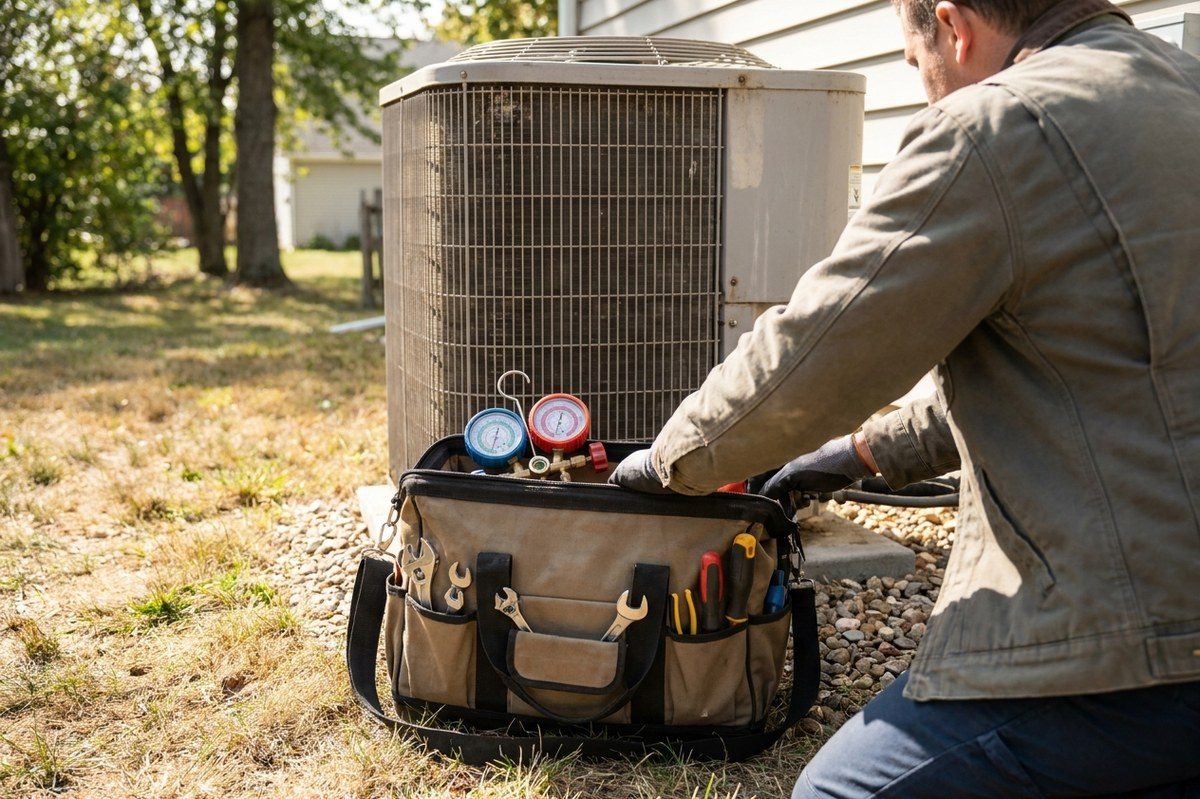
STM Heating & Air service team · field-reviewed before publishing
What Spring And Summer Do To A System Around Here
Across the region, a cooling system sits idle most of the winter and then gets asked to run for hours at a stretch the first week it turns hot. Capacitors that were weak in October fail under that load. Condensate drains that dried out over winter clog with algae the first humid week. Outdoor units on ridge properties collect pollen, seed fluff and clay dust that pack the coil fins until the unit cannot shed heat. Homes with crawlspace ductwork also see spring moisture push through leaky returns, which makes the system run longer for less cooling. None of that shows up until you actually need the air conditioning.
Which Failures Spike, And When
Late March through April we mostly see no-start calls. The thermostat calls for cooling, the indoor blower runs, and the outdoor unit sits quiet because a start or run capacitor gave out. May brings drain line backups and float switch shutoffs as humidity climbs. June and July are when low refrigerant charge shows itself, since a small leak that was tolerable in mild weather cannot keep up at peak load, and that is also when compressors and contactors that were already struggling quit. Heat pump homes sometimes discover a stuck reversing valve in spring, which means the system heats when you asked it to cool.
Safe Checks You Can Do This Weekend
Start at the thermostat. Fresh batteries, set to cool, fan on auto, and the setpoint several degrees below room temperature so the system actually calls. Check your electrical panel for a tripped breaker, including the separate outdoor disconnect breaker if you have one. Change the filter, and note the size while you are there so you can keep spares. Walk around the outdoor unit and clear leaves, grass clippings and any shrubs crowding it, aiming for a couple of feet of clear space on all sides. Inside, walk the house and confirm supply and return vents are open and not blocked by furniture or rugs.
What We Check That You Should Not
Refrigerant pressures, electrical testing and anything behind a panel is our work. We measure the temperature split across the coil, read amp draw on the compressor and blower, test capacitors under load rather than by eye, check the contactor for pitting, flush the condensate line and confirm the float switch works. On dual-fuel systems we verify the changeover logic so the propane side is not firing when the heat pump should be handling the load. We also look at duct connections in the crawlspace, because red clay crawlspaces are hard on flex duct and a disconnected run wastes a lot of cooling.
Timing And Getting Ahead Of The Rush
Book pre-season work while the weather is still mild. Once the first genuine hot week hits anywhere across Alabama, Georgia, Kentucky, North Carolina, South Carolina or Tennessee, call volume jumps and everybody wants the same afternoon. A system checked in April with a weak capacitor gets a part replaced on a normal schedule. The same system in July gets discovered at nine at night with the house at eighty-four degrees. If your air conditioner is more than ten years old, or last summer it ran constantly and still could not hold setpoint, that is worth a look now rather than a repair call later.
When To Stop And Call For Air Conditioning Repair
If you smell gas anywhere near the home, leave the building first, then call 911 or your gas utility from outside, and call us after you are safe. Short of that, call for air conditioner repair if the outdoor unit hums but the fan does not spin, if the breaker trips again after you reset it once, if there is ice on the refrigerant lines or the indoor coil, or if water is standing near the indoor unit. Repeated breaker trips and icing both point to problems that get more expensive the longer the system keeps running.
Getting Cooling Ready Before the First Hot Week — fast answers
How often should I change the filter in summer?
Check a one-inch filter monthly during the cooling season and change it when it looks loaded. Thicker media filters usually go longer. Pollen season and pets both shorten filter life, so go by appearance rather than the calendar.
My AC runs constantly but the house never cools. What is wrong?
That usually points to low refrigerant charge, a dirty outdoor coil, or duct losses in the crawlspace. Change the filter and clear debris around the outdoor unit first, then call us for AC repair if it continues.
Is it worth having the system checked if nothing seems wrong?
Yes, because weak capacitors, pitted contactors and partially clogged drains do not announce themselves until peak load. Finding them in spring means a scheduled repair instead of an emergency call during the first hot week.
How it works
- Step 1
Tell us the symptom
Call or fill in the quote form and describe what you hear, smell or feel. Warm air, short cycling, a breaker that keeps tripping. That gives us a head start on the likely cause.
- Step 2
We diagnose on site
A technician checks the thermostat, airflow, electrical connections, refrigerant performance and the outdoor unit. We work the crawlspace and the attic too, because ductwork and drainage cause more trouble than people expect.
- Step 3
You decide, then we fix it
We explain what failed, what it takes to repair it, and what we would watch next season. No work starts until you say go. Most repairs finish the same visit when parts are on the truck.
- A real person answers
- Open 7 days
- Written quote before work starts
Why homeowners call us
- Mixed heating is normal to usHeat pumps, propane furnaces and dual-fuel setups all behave differently in cold weather. We know how a heat pump should sound in the thirties and when the backup heat is doing too much of the work.
- We go under the houseRed clay crawlspaces hide crushed ducts, sweating lines and standing water. Comfort problems often start down there, not at the unit, so we look before we start replacing parts you may not need.
- Plain explanationsYou get told what broke and why, in words that make sense. If a repair is a short-term patch on an aging system, we say that out loud so you can plan instead of guessing.
- One crew, six statesWe serve homeowners across Alabama, Georgia, Kentucky, North Carolina, South Carolina and Tennessee. Same approach in every one: show up, diagnose properly, repair what needs repairing, leave the space clean.
- All major brands, gas & electricOne independent crew for Carrier, Trane, Lennox, Goodman, Rheem and more.
- Straight answersNot worth fixing? We say that out loud, and often it saves you the visit fee.
About this guide
Safe checks done and it still misbehaves? That's a real fault
Report what you saw during the checks and we handle the rest. A minute to book.
- A real person answers
- Open 7 days
- Written quotes
- All major brands
- Gas & electric
Rather not call? Get a free quote →