
Top-rated independent heating and cooling across north Georgia and the southern Appalachians
What Belongs Around the Outdoor Unit, and What Doesn't
Your outdoor unit sits out back in the weather all year, and most people stop noticing it after the first summer. Then the grass grows in, the mulch pile creeps closer, and the hedge you planted for looks is now leaning on the coil. Here is what belongs around that unit, what does not, and how to tell when the crowding has already cost you.
Call (888) 878-4879- Real people on the phone
- 7 days a week
- Quote in writing before any work
Taking calls until 5:00 PM ET
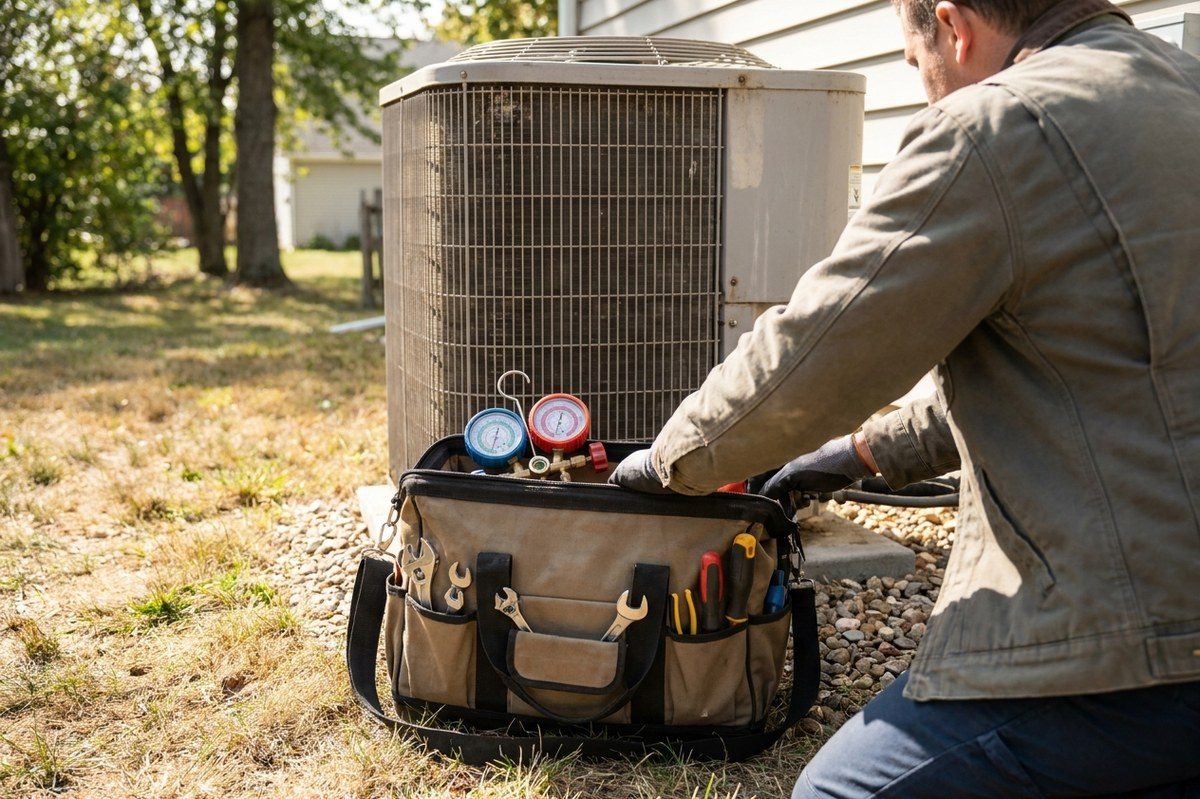
STM Heating & Air service team · field-reviewed before publishing
What Crowding Does to the Unit Over Time
The outdoor unit works by dumping heat into the air moving through its coil. Block that airflow with shrubs, a fence, stacked firewood or a tarp, and the heat has nowhere to go. The system runs longer for the same cooling, head pressure climbs, and the compressor works against itself. That is a slow failure, not a sudden one. You usually notice the power bill and the long run times before anything quits. Grass clippings and cottonwood fuzz mat into the fins the same way, and red clay dust from a crawlspace or driveway bakes onto the coil into a crust that no garden hose will move.
The Clear Zone That Actually Matters
Give the unit about two feet of open space on every side and five feet of clear air above it. Nothing stacked against the cabinet, nothing overhanging the top, no lattice screen pressed up tight to hide it. If you want to screen the unit for looks, set the panels back a good three feet and leave gaps for air to pass. Keep mulch below the base rather than piled against it, because damp mulch holds moisture on the metal and invites wasps and mice into the cabinet. Trim back the branch that drops leaves right onto the fan grille. That one branch causes more service calls across the region than most people expect.
The Habit, and How Often to Do It
Walk out to the unit once a month during the seasons you are running it, and take about two minutes. Look for anything new leaning on it, pull weeds growing through the base, and sweep off leaves, pine straw or grass clippings sitting on the top grille. When you mow, aim the discharge chute away from the unit instead of at it. After a storm, check for a limb or a piece of siding sitting across the fan. Twice a year, walk the whole clear zone and cut back whatever grew in since the last look. That is the entire routine. It prevents more problems than any single thing else a homeowner can do.
Winter, Heat Pumps and Ridge Weather
If you run a heat pump, the outdoor unit is working in January too, and it needs the same clear space in cold weather. Do not wrap or cover a heat pump for winter. Covering it traps moisture and blocks the airflow the unit still needs. Keep snow and ice from drifting up against the sides, and make sure the spot where roof runoff lands is not right on top of the cabinet, because repeated freezing there builds a solid collar of ice. A thin layer of frost during a defrost cycle is normal. A unit encased in ice is not, and that is a call to us.
Signs the Crowding Already Did Damage
Watch for the system running nearly nonstop on a hot afternoon while the house never quite gets there, air from the vents that feels cool rather than cold, or an outdoor unit that is noticeably louder and hotter to stand beside than it used to be. A breaker that trips on the hottest days is another one. If you see any of that, clear whatever you safely can from around the unit, change the filter, confirm the vents inside are open, and then call us for air conditioning repair. Do not open the cabinet or touch the refrigerant lines. We handle AC repair and heating repair across Alabama, Georgia, Kentucky, North Carolina, South Carolina and Tennessee.
When it is time to book
What Belongs Around the Outdoor Unit, and What Doesn't — fast answers
Can I plant shrubs around my outdoor unit to hide it?
Yes, if you plant them at least three feet back and keep them trimmed so they never lean on the cabinet. Slow-growing plants are easier to live with. Leave the top completely open above the fan.
Should I cover the outdoor unit in winter?
No. Covers trap moisture against the metal and give mice a place to nest. If you run a heat pump, the unit is working all winter and needs open airflow. Just keep leaves and ice off it.
How do I clean the outdoor coil myself?
You can safely clear leaves, grass and debris from around and off the top of the unit. Leave coil washing, fin combing and anything requiring the cabinet to be opened to us, since that means electrical and refrigerant components.
How it works
- Step 1
Tell us the symptom
Call or fill in the quote form and describe what you hear, smell or feel. Warm air, short cycling, a breaker that keeps tripping. That gives us a head start on the likely cause.
- Step 2
We diagnose on site
A technician checks the thermostat, airflow, electrical connections, refrigerant performance and the outdoor unit. We work the crawlspace and the attic too, because ductwork and drainage cause more trouble than people expect.
- Step 3
You decide, then we fix it
We explain what failed, what it takes to repair it, and what we would watch next season. No work starts until you say go. Most repairs finish the same visit when parts are on the truck.
- A real person answers
- Open 7 days
- Written quote before work starts
Why homeowners call us
- Mixed heating is normal to usHeat pumps, propane furnaces and dual-fuel setups all behave differently in cold weather. We know how a heat pump should sound in the thirties and when the backup heat is doing too much of the work.
- We go under the houseRed clay crawlspaces hide crushed ducts, sweating lines and standing water. Comfort problems often start down there, not at the unit, so we look before we start replacing parts you may not need.
- Plain explanationsYou get told what broke and why, in words that make sense. If a repair is a short-term patch on an aging system, we say that out loud so you can plan instead of guessing.
- One crew, six statesWe serve homeowners across Alabama, Georgia, Kentucky, North Carolina, South Carolina and Tennessee. Same approach in every one: show up, diagnose properly, repair what needs repairing, leave the space clean.
- All major brands, gas & electricOne independent crew for Carrier, Trane, Lennox, Goodman, Rheem and more.
- Straight answersNot worth fixing? We say that out loud, and often it saves you the visit fee.
About this guide
Safe checks done and it still misbehaves? That's a real fault
Mention which checks you ran when you book; it speeds up the visit.
- A real person answers
- Open 7 days
- Written quotes
- All major brands
- Gas & electric
Rather not call? Get a free quote →