
Top-rated independent heating and cooling across north Georgia and the southern Appalachians
Cool but Clammy
Your thermostat says 73, the AC is running, and the house still feels like a damp basement. Floors feel sticky, the air smells musty, and nobody is comfortable. That is a humidity problem, not a temperature problem, and it is common across the Southeast. Here is what causes it, what you can safely check yourself, and what we look at when we come out.
Call (888) 878-4879- Real people on the phone
- 7 days a week
- Quote in writing before any work
Taking calls until 5:00 PM ET
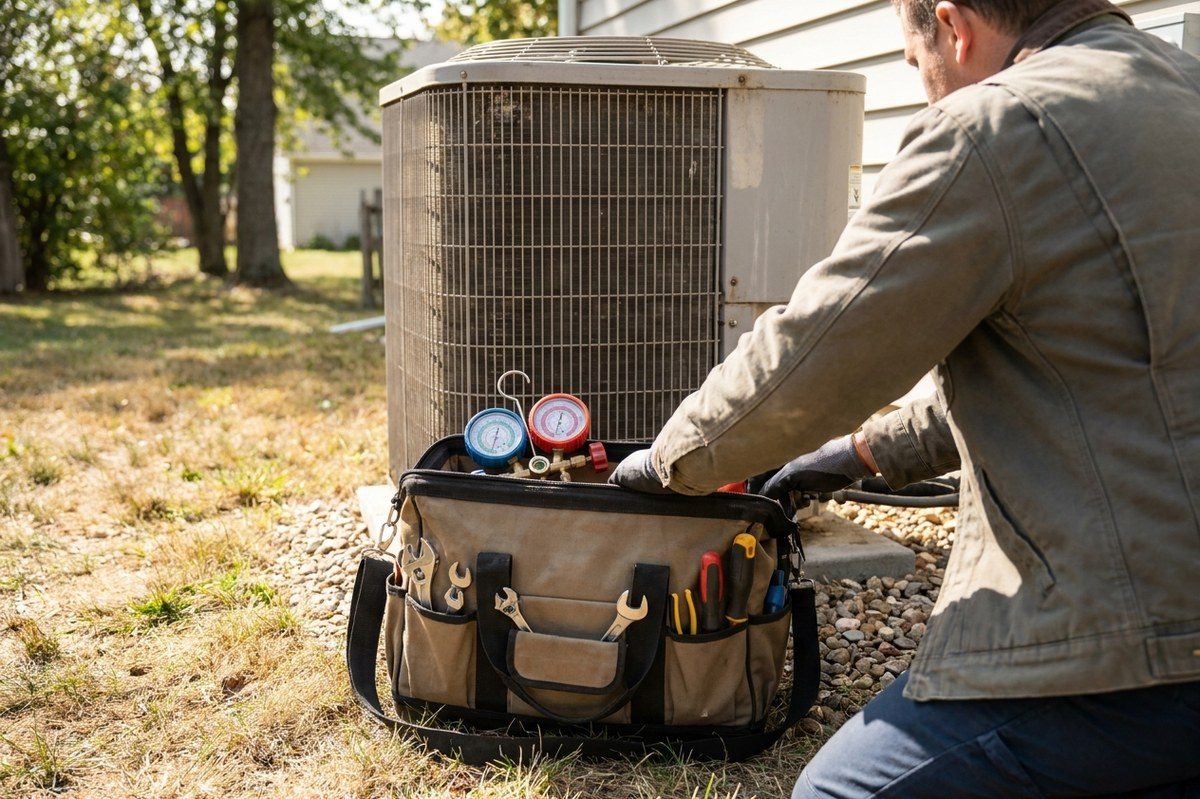
STM Heating & Air service team · field-reviewed before publishing
What Clammy Air Actually Means
When your house hits the set temperature but still feels wet, your air conditioner is removing heat without removing enough water. Cooling and dehumidifying happen at the same time: warm indoor air passes over a cold coil, moisture condenses out, and that water drains away. If the system reaches temperature too fast, or air moves across the coil too quickly, or there is simply too much moisture coming into the house, the water stays in the air instead of going down the drain. Indoor humidity above roughly 55 percent is where most people start to feel it. The fix depends on which part of that chain is failing.
Cause One: Airflow And Filter Issues
Start with the cheapest possibilities. A filter packed with dust restricts airflow, which can freeze or starve the coil and hurt moisture removal. Closed or blocked supply vents do the same thing in reverse by pushing air through fewer openings. A blower set to run too fast moves air across the coil so quickly that water never has time to condense and drip off. Set your fan to AUTO rather than ON, because a fan running continuously after the compressor stops re-evaporates the water sitting on the coil and blows it right back into your rooms. That single setting change fixes clammy houses more often than people expect.
Cause Two: Moisture Coming In From Outside The Ducts
In this part of the country, red clay crawlspaces are a major water source. Bare dirt gives off moisture all summer, and if your ducts or return runs are down there, the system pulls that damp air into the house. Leaky return ducts in a hot attic do the same thing with humid outdoor air. Add bathroom fans that vent into the attic, a dryer duct that has come loose, gutters dumping against the foundation, and you have more water entering than the AC can pull out. These are building problems, not equipment problems, but they show up as a clammy house and they need to be found before new equipment gets blamed.
Cause Three: The Equipment Itself
Low refrigerant charge, a dirty indoor coil, or a plugged condensate drain all reduce moisture removal. So does a system that is oversized for the house: it cools the rooms so fast that it shuts off before it has run long enough to dry anything, which is why some big new systems feel worse than the old one. Short cycling with cold, damp air is a classic sign. We also see clogged drain pans that let water sit and evaporate back inside. None of this is homeowner work. Refrigerant and electrical diagnosis takes gauges, meters and training, and guessing at charge makes systems worse.
What You Can Check, And What We Do Differently
Safe checks: put in a clean filter, set the fan to AUTO and the mode to COOL, make sure supply and return vents are open and not blocked by furniture, clear leaves and grass clippings a couple of feet back from the outdoor unit, and check the breaker if the system is dead. Buy an inexpensive hygrometer so you know your actual humidity instead of guessing. When we arrive for air conditioning repair, we measure temperature split and static pressure, check the charge, look at coil and drain condition, inspect duct runs in the crawlspace or attic, and compare run times to the load. That tells us whether you need a repair, a duct fix, or added dehumidification. Call us and we will sort it out.
When it is time to book
Cool but Clammy — fast answers
Will turning the thermostat lower dry out my house?
Usually not. Lowering the setting makes the house colder and clammier, since cold damp air feels worse. Longer run times and proper airflow remove moisture. If the system already runs constantly and humidity stays high, something needs diagnosis.
Do I need a whole-house dehumidifier?
Sometimes, but only after we rule out filter and airflow problems, duct leaks, crawlspace moisture and equipment issues. If the house still runs humid with everything working right, a dedicated dehumidifier tied into the ductwork is the reliable answer.
Why does my new system feel more humid than the old one?
Often it is oversized or the blower speed is set too high. It reaches temperature quickly and shuts off before pulling much water out of the air. Blower and staging adjustments frequently fix it without replacing anything.
How it works
- Step 1
Tell us the symptom
Call or fill in the quote form and describe what you hear, smell or feel. Warm air, short cycling, a breaker that keeps tripping. That gives us a head start on the likely cause.
- Step 2
We diagnose on site
A technician checks the thermostat, airflow, electrical connections, refrigerant performance and the outdoor unit. We work the crawlspace and the attic too, because ductwork and drainage cause more trouble than people expect.
- Step 3
You decide, then we fix it
We explain what failed, what it takes to repair it, and what we would watch next season. No work starts until you say go. Most repairs finish the same visit when parts are on the truck.
- A real person answers
- Open 7 days
- Written quote before work starts
Why homeowners call us
- Mixed heating is normal to usHeat pumps, propane furnaces and dual-fuel setups all behave differently in cold weather. We know how a heat pump should sound in the thirties and when the backup heat is doing too much of the work.
- We go under the houseRed clay crawlspaces hide crushed ducts, sweating lines and standing water. Comfort problems often start down there, not at the unit, so we look before we start replacing parts you may not need.
- Plain explanationsYou get told what broke and why, in words that make sense. If a repair is a short-term patch on an aging system, we say that out loud so you can plan instead of guessing.
- One crew, six statesWe serve homeowners across Alabama, Georgia, Kentucky, North Carolina, South Carolina and Tennessee. Same approach in every one: show up, diagnose properly, repair what needs repairing, leave the space clean.
- All major brands, gas & electricOne independent crew for Carrier, Trane, Lennox, Goodman, Rheem and more.
- Straight answersNot worth fixing? We say that out loud, and often it saves you the visit fee.
About this guide
Checked everything on the list and it still acts up?
Describe what you found and we'll take it from there. Booking takes about a minute.
- A real person answers
- Open 7 days
- Written quotes
- All major brands
- Gas & electric
Rather not call? Get a free quote →